

Author bio: Isobel Pring is the Coast Path Officer for the King Charles III England Coast Path in Somerset.
Last year the Somerset Trail Partnership for the King Charles III England Coast secured funding to create Somerset’s Accessible Coast, an online resource that showcases the Somerset coast.
The aim was to take sections of the Coast Path and the footpaths that linked to it, to create a virtual tour of five key trail sections. Each tour would highlight where routes were easily accessible, where they present challenges, where trail users might encounter barriers, and where facilities such as parking and toilets are located.
We looked at various ways of doing this and decided on Street View style tours. Not only would these show the whole trail so that people could familiarise themselves with the route before setting out, but they would also allow those unable to physically access the path to experience it virtually.
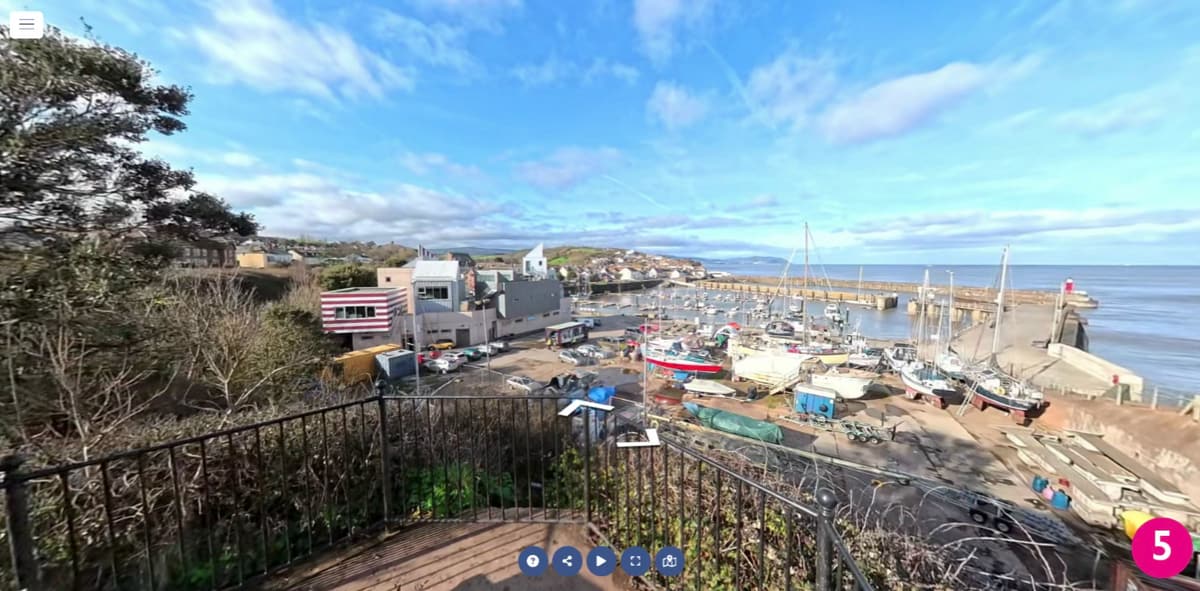
As we waited for good weather to film the locations, the task began to decide how we could categorise footpaths and trails. Looking at systems like Miles Without Stiles (used by National Parks), the Disabled Ramblers grading system, and the many guidelines for accessible path design, it became clear that we needed to look at our trails in a new way.
To do this we created five criteria to use when assessing the routes:
- Path surface
- Path width
- Gradients
- Cross-slopes
- Barriers
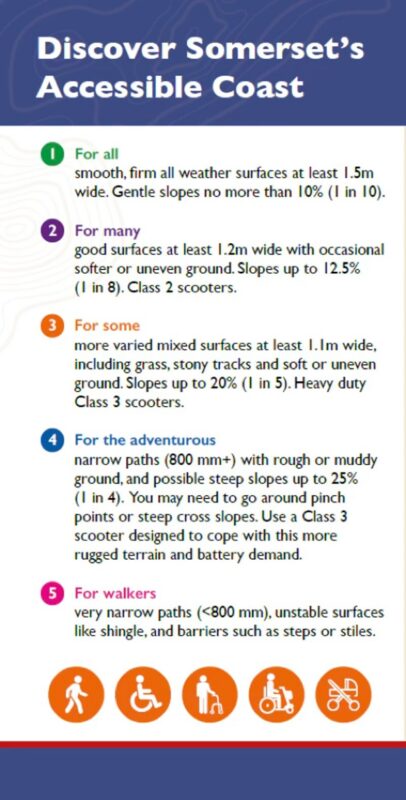
We then had to decide what was suitable for different levels of mobility equipment such as manual wheelchairs, electric wheelchairs, Class 2 scooters, Class 3 scooters and specially designed trampers with the wheel size, battery power and stability to cope with rougher terrain.
The result was a five-level rating system and a “plus” category to show when a path’s rating might increase in winter or after a spell of wet weather.
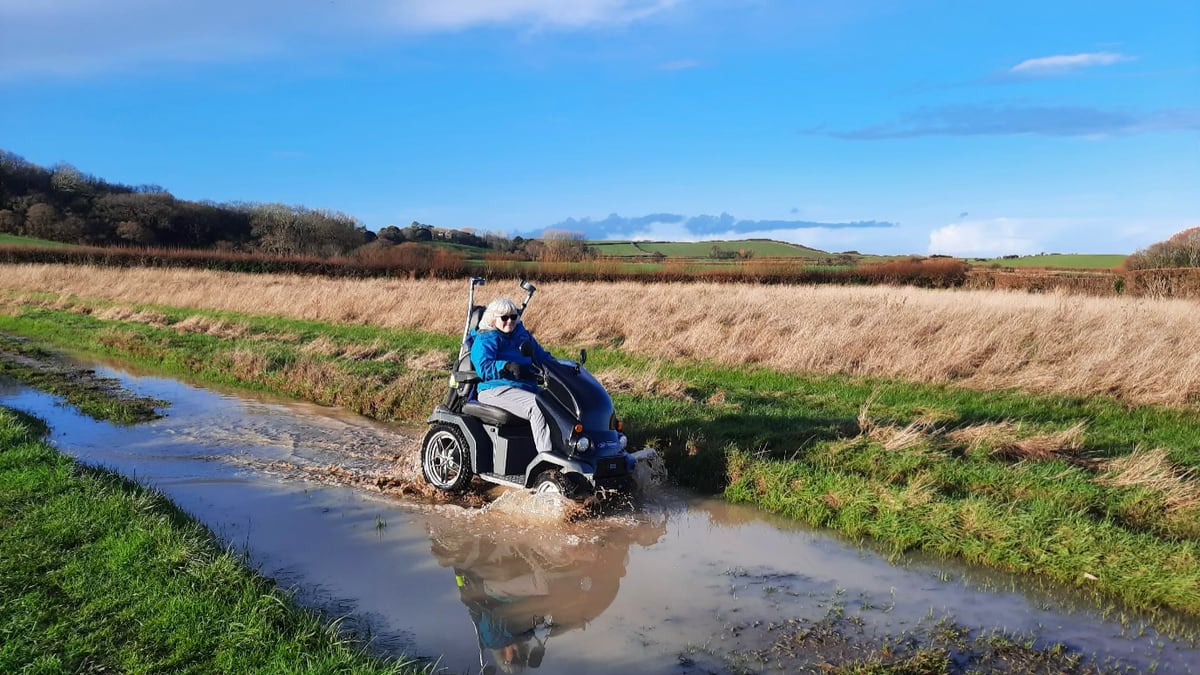
With the frameowrk in place it was time to get out and rate the paths. Looking at a path from so many different perspectives makes you see it in a new light. A rut in the surface might not mean much to seasoned hikers, but for a scooter user the resulting cross-slope might make it impossible to use the route.
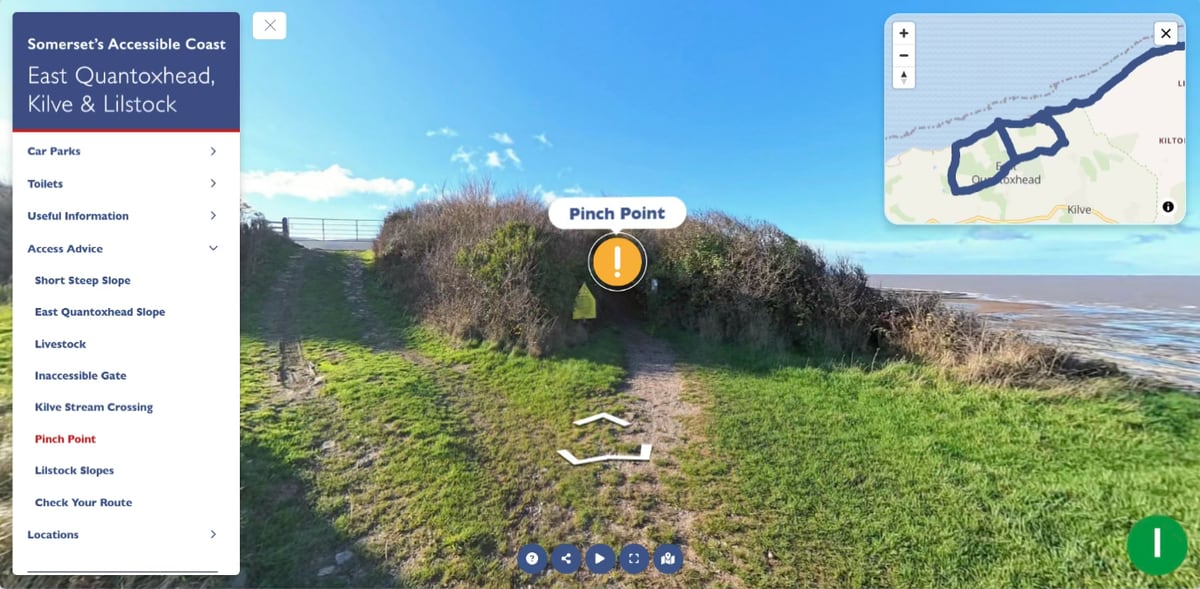
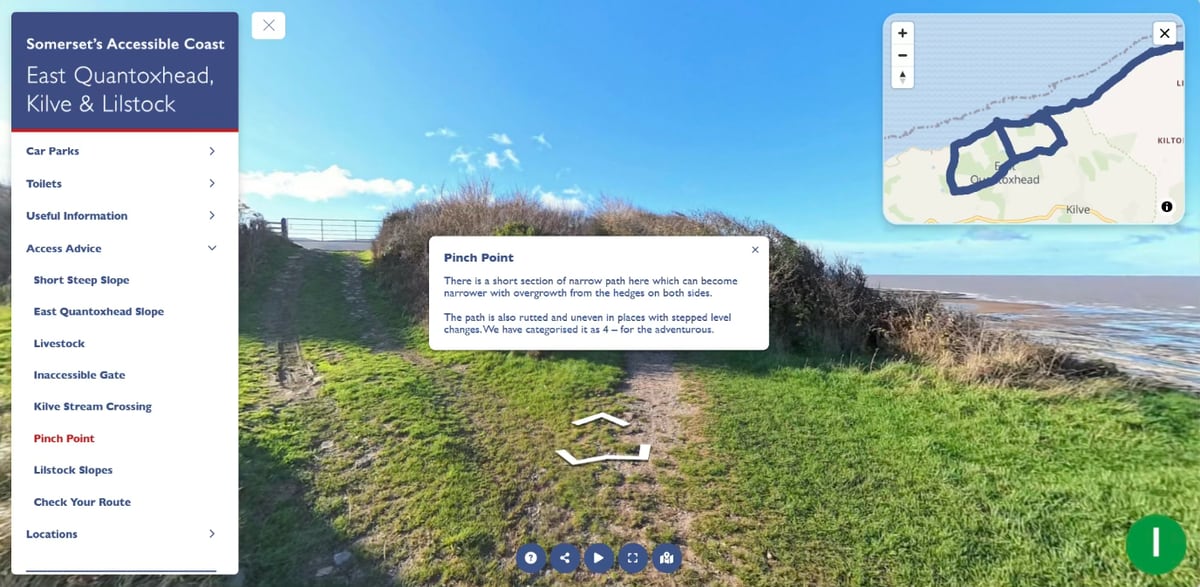
Narrow gates, overgrowth from hedges, step changes in the path, uneven surfaces with loose stones, and trails rutted by dips in the most used section of the route all have the potential to make a route inaccessible.
We quickly realised that in many cases relatively minor changes could make the difference between being able to get out and experience the coast and being restricted to a small set of paths.
Mobility wasn’t the only consideration. Conversations with neurodivergent support groups highlighted that not knowing what to expect was itself a barrier. Not knowing what to expect – such as the presence of livestock – could discourage some people from visiting certain routes.
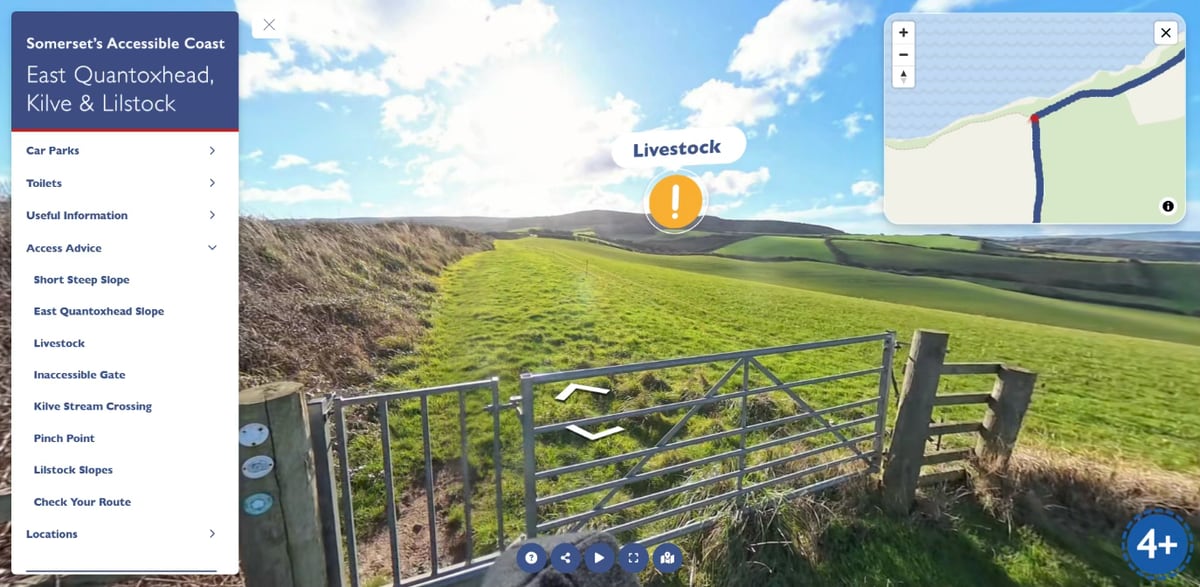
As filming began, we documented each route in detail by dividing it into sections. For every section, we assessed surface, width, gradients, cross-slopes and barriers, assigning an appropriate accessibility rating in each category and then assigning an overall rating for each section of path.
Exploring with Paula from Disabled Ramblers was particularly insightful. Her experience of using trampers and scooters on varied terrain helped us better understand how different users interact with paths, and how best to reflect that in our ratings.
The system we had chosen to implement also gave us the ability to embed hotspots in the resulting virtual tours to highlight information that might help someone plan a route and decide where to go. A menu system also allows users to quickly navigate to key features along the trail.
For each of the five areas we mapped carparks, public toilets, information centres and useful information about the area, as well as creating a series of ‘Access advice’ hotspots.
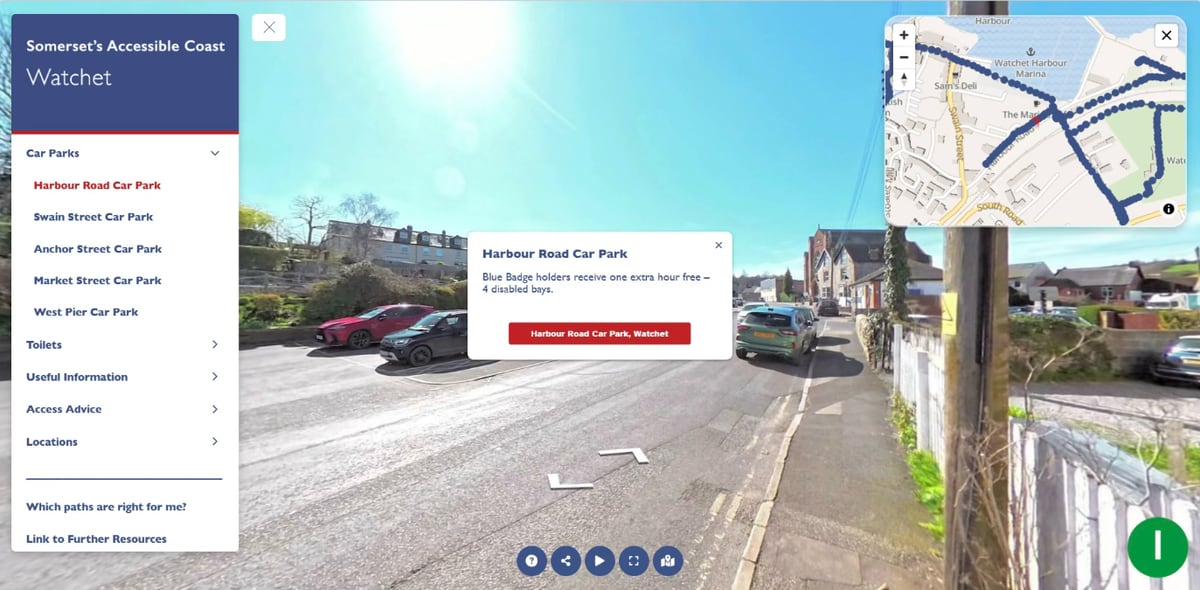
The result is a set of five virtual tours supported by printed leaflets with maps. Together they enable people to plan a trip to the coast with confidence – identifying where to park, where the loos are, which routes to use or to avoid, and where potential obstacles might arise.
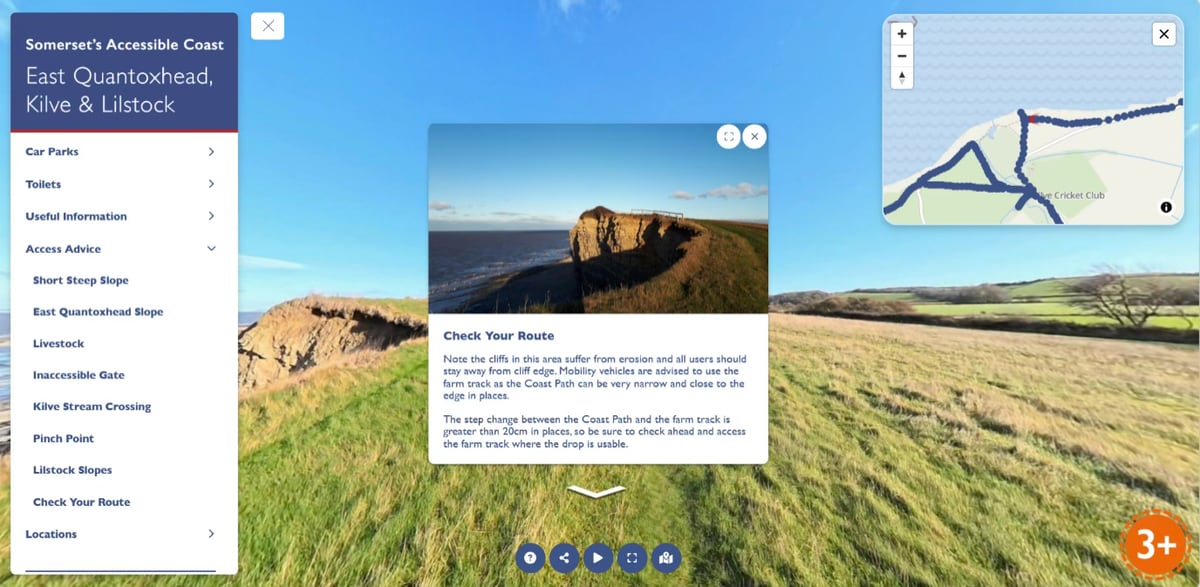
For the Somerset Trail Partnership the project has also created a valuable list of projects that, in time, will help us to make the Coast Path in Somerset accessible to as many people as possible.
To see Somerset’s Accessible Coast tours and information, visit: Somerset’s Accessible Coast – National Trails