

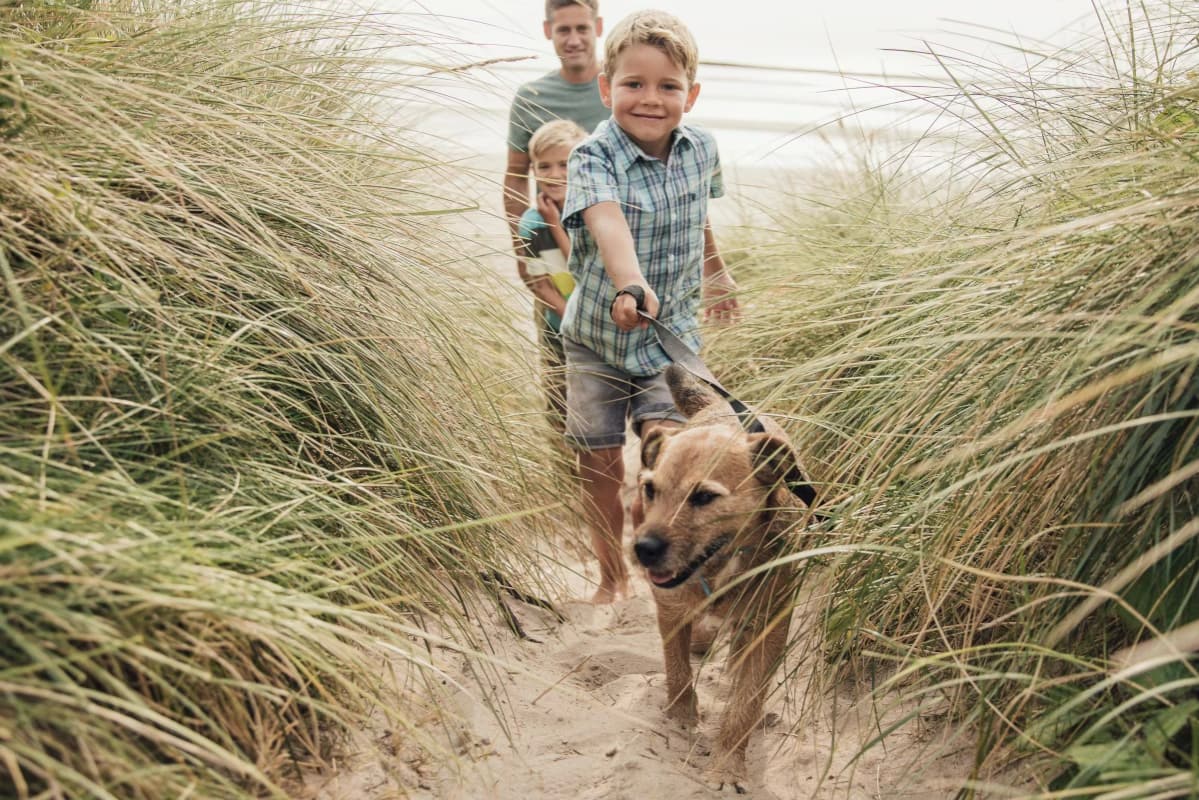
Planning a weekend where walkers get their routes, families stay comfortable, and dogs remain happy feels like juggling three agendas. But it’s doable if you approach it right. The secret isn’t compromise, but more about choosing a base that naturally accommodates all three groups, then building plans around that anchor point.
Start with location and timing
Coastal destinations provide something for everyone with established walking paths, accessible family amenities, and mixed terrain for dogs.
Timing your break away matters. For families with young children, shoulder seasons (May or September) beat peak summer. If your dog struggles with heat, spring and autumn are gentler. Serious walkers often prefer winter walks, when the air is crisp and visibility is at its best.
Keeping your travel time to around two hours leaves more of your weekend doing what you came for, and if you’re relying on public transport, check routes in advance as some coastal villages are better served than others.
The accommodation decision
A thoughtful accommodation choice is the key to a friction free break for all. For the walkers in the group, access to routes is the focus (ideally within walking distance of the cottage), along with decent weather shelter, and a welcoming attitude to muddy boots and waterproofs. For dogs, this means a cottage with a fenced garden (safety and bathroom breaks without drama), water bowls, and ideally some dog-specific amenities like washing facilities. Families need the space to spread out, a kitchen for quick meals, somewhere kids can settle after a walk, and proximity to cafés or shops if you need supplies.
Several UK coastal locations work particularly well.
Camber Sands, East Sussex
The only significant sand dune system on England’s south coast, compared to the more commonly seen shingle beaches, which means the sandy walking terrain here is genuinely rare. It sits just 4.3 miles from the historic town of Rye, with established coastal paths within walking distance and quiet village amenities nearby. The accommodation market here is geared toward multi-group holidays, with specialists like Beside the Sea Holidays offering dog-friendly cottages with fenced gardens and direct beach access. This makes it straightforward to find a base that works for walkers, families and dogs.

Cromer, Norfolk
This coastal resort anchors the Norfolk Coast Path, with a 46-mile trail running through some of the UK’s most accessible coastal scenery. The town itself retains old-school seaside charm with good family infrastructure (arcades, cafés, pubs), and the surrounding terrain is notably flatter than the south coast, which suits walkers of mixed abilities. Norfolk’s beaches have year-round dog access outside peak season, making it friendlier for canine companions than many English resorts.
Tenby, Pembrokeshire
A Carmarthen Bay beauty offering dramatic cliff walks along the Pembrokeshire Coast Path combined with a buzzing seaside town. Family amenities are well-developed, and Wales has a notably dog-friendly culture across its beaches and outdoor spaces. The trade-off here though is a longer drive for anyone based in central or southern England.
Each destination can cater well to the needs of all, but your choice will depend on how far you’re willing to travel and what type of coastal scenery appeals most. The cottage of choice becomes your weekend operational base.
Walks that work for mixed ability
Coastal paths are fairly forgiving for mixed group parties. They’re usually waymarked clearly and offer opportunities to rest or bail out at various points. Look for routes with built-in loops or exit options.
Terrain is an important factor. Shale and shingle paths are tough underfoot, grass and firm sand suit varied walkers and dog paws. Check the type of conditions around your chosen location before you go, so you know what lies ahead.
Split your walking adventures up if needed. A morning ramble before kids tire, followed by an afternoon shoreline potter, feels less strenuous than one long day. Don’t forget dogs need shade and water too, and a genuine rest between walks.
The Outdoor Guide has a section dedicated to dog-welcoming walks for more ideas on routes that work for all.
Family-specific considerations
Children need frequent stops, things to spot, and adventures rather than hikes. Coastal exploration provides this naturally. Rock pooling at low tide, driftwood collecting, and watching waves are built-in activities. Bring along a small net, bucket, and field guide to transform a small walk into a treasure hunt.

Daylight matters more with families, especially in the autumn and winter, so plan morning starts that allow you to avoid walking back in darkness with tired children. Cafe stops work better than packed lunches at this time of year too.
Dog management on a walking weekend
Dogs don’t need multiple walks a day, but do need thoughtfully planned agendas. An excited dog on day one means a tired dog on day two, so plan tougher routes when your dog’s freshest.
Heat is the biggest risk on coastal paths, so avoid midday walks during warm months, opt for the more comfortable early morning or evening, and always carry water. Don’t forget that coastal pebbles and salt irritate paws, so make sure you rinse your dog’s feet after shale beaches and check between toe pads for stones.
Be aware of local beach dog policies before you arrive, as many UK beaches restrict dogs in summer (May to September). The Where Is My Beach seasonal beach guide covers restrictions and safety across UK coastal areas.
When venturing more inland, lead control around livestock and nesting birds matters. Coastal paths will sometimes cross farmland or bird reserves, and closing gates behind you is non-negotiable.
Practical packing and planning
Coastal weather changes fast, so pack sensibly and be prepared with base layer, mid-layer, and windproof outer options. Waterproofs are essential, and should never be left at home.
The practical essentials for dogs include a lead, dog waste bags, collapsible water bowl, and basic first aid. For families, pack snacks, wipes, and a change of clothes for children. Coastal spray and sand mean you’ll need time to wash and dry before heading home.
Remember to download offline maps or carry paper ones. Signal can be patchy on coastal paths, and having a back-up to hand takes the stress out of your adventures. The Ramblers Association has a range of routes and planning guides including coastal paths for all abilities, while OS Maps offers detailed mapping in both digital and print formats, so you can plot online or carry a paper copy. Outdooractive also features expert-approved trails to save offline before you go.
The right base removes the stress
The difference between a successful multi-group weekend and a frazzled one comes down to a handful of decisions working together to create a weekend that runs itself. Sensible timing, routes that can flex for mixed abilities, a bit of forward planning for the dog and enough to keep the children engaged is the perfect combination.
The base you choose holds it all together, and a cottage that genuinely welcomes walkers, families and dogs means your coastal weekend has everything at hand. That’s how short breaks become something everyone genuinely enjoys and wants to book again.
Author: Annie Button